Where do our bodies begin and end? What are the conditions through which society understands monstrosity and makes its monsters? How has monstrosity manifested in our pain, disability, queerness and transness?
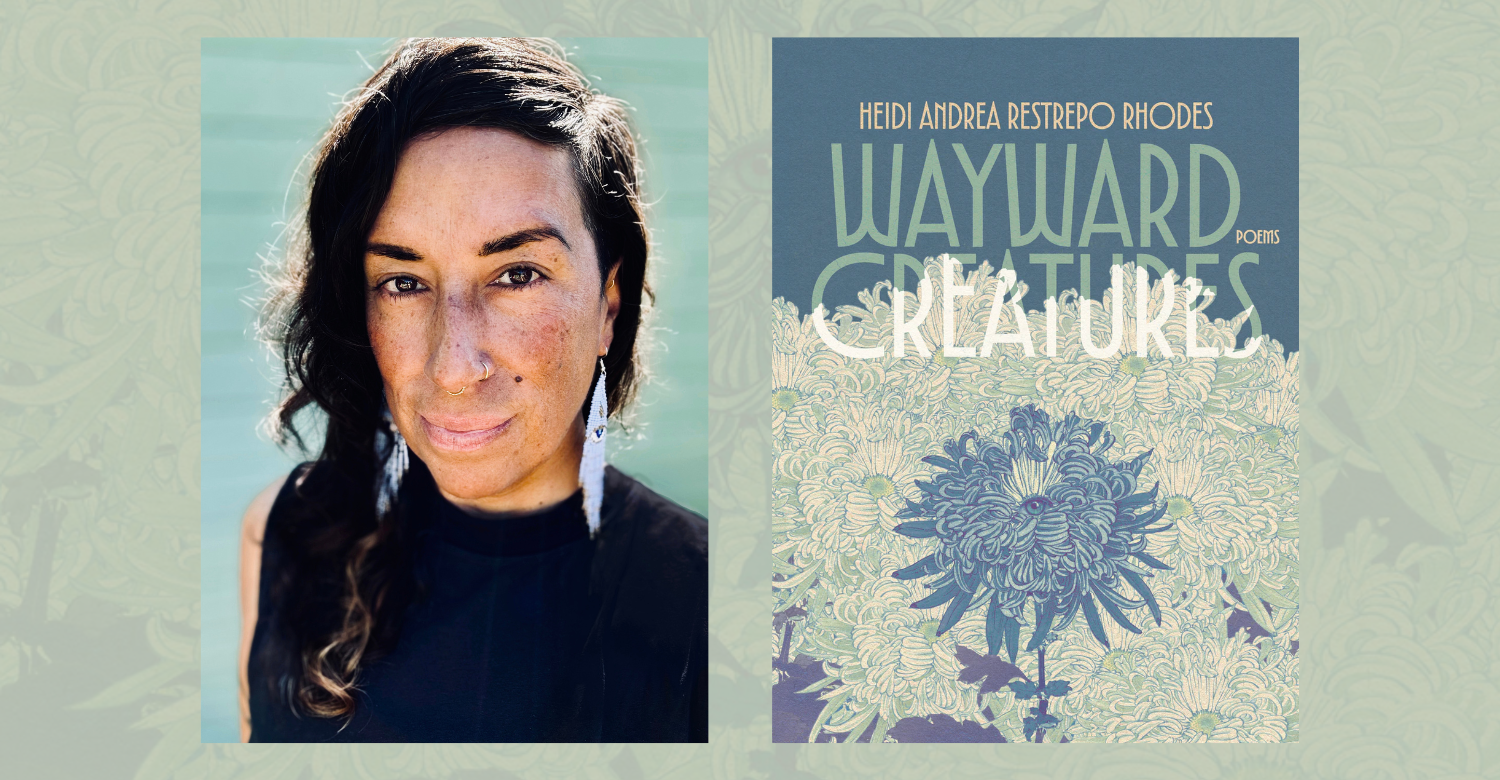
The poems of Wayward Creatures by heidi andrea restrepo rhodes are a reclamation of monstrosity as a kind of devotional embodiment. As rhodes third poetry collection, Wayward Creatures follows the publication of a scholarly monograph. The poems investigate transformations between human and creature, wound and world, lover and wolf, self and galaxy, and refuse supremacist normalcies. Poems span subject matter and form: erasures of anti-trans legislation, a poem kinning octopus, a trans opera, a list of holy queer sacraments, an anti-essay, poems of pleasure in which a lover is indistinguishable from god. The collection explores familiar spaces, animals, and experiences with sensual, strange, specific language, in ways that feel unfamiliar and offer perspective. Cicadas become ordinary people…begging for mercy. Disabled, neuroqueer, traumatized, trans, migratory bodies resist the medical industrial complex, psychiatry, and state control.
As a nurse, I was struck by poems that transformed the cold medical world of doctors’ offices, hospitals, and psychiatry, into intimate sites bridging gaps that formal healthcare cannot fill. In “A Small Disunified Theory,” restrepo rhodes writes:
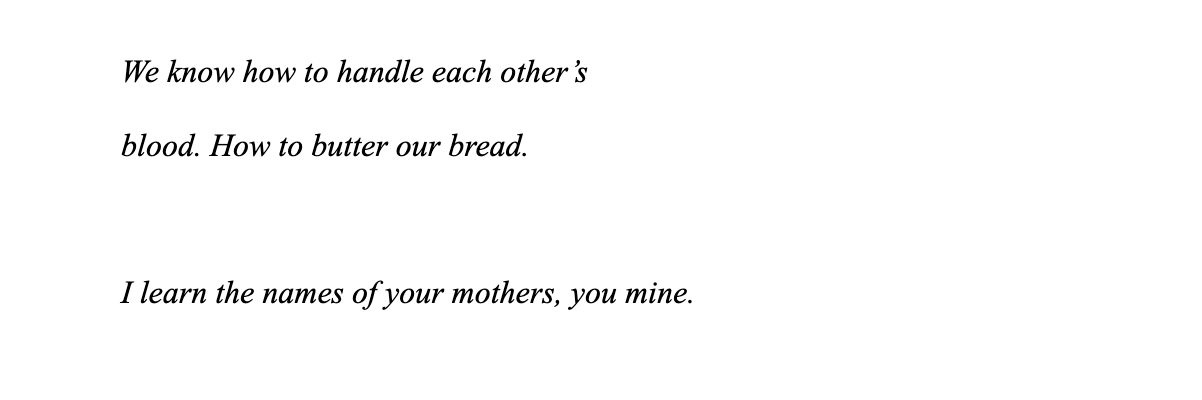
This is the intimacy that connects us while shattering the illusions of medical compartmentalization, individualism, separation between self and other, our actions and consequences: an intimacy that disrupts order.
The collection swims in the romance of being a monster among monsters. By archiving stories of love and solidarity, intimacy and care, and friendship beyond death, the poems remind me of the gift of monstrosity: it’s how we keep each other alive through apocalypse. Monsters are our living relations, monsters are our mothers, as in “Every Mother is a Gathering”:

I think about the people who raised me: as a child, librarians and parents of friends; as a queer adult, lovers and best friends and strangers on the internet. Deviant survival is challenged every day, and isn’t this beautiful in its own way? To know that for every day we survive, our breath defeats those who want us dead.
The kaleidoscope of bodily experience in pleasure and pain, ceremony and disability, are not opposed: the holy body is also a miserable object, pain holds transformative pleasure, pleasure can pain. I did not expect to find myself crying in the final poem, an invitation and commitment to all the loves, devotions, and complexities woven throughout the collection:

Wayward Creatures is a sensual, horny, monstrous, sick, fantastical, devotional text. The collection embraces what artist Constantina Zavitsanos has called the “infinitesimally divisible nowness” of the body in the everchanging moment. It serves to archive resistance and demonstrates the multiplicity of possibility in the every day. It asks us to tend to what might be: our own waywardness.
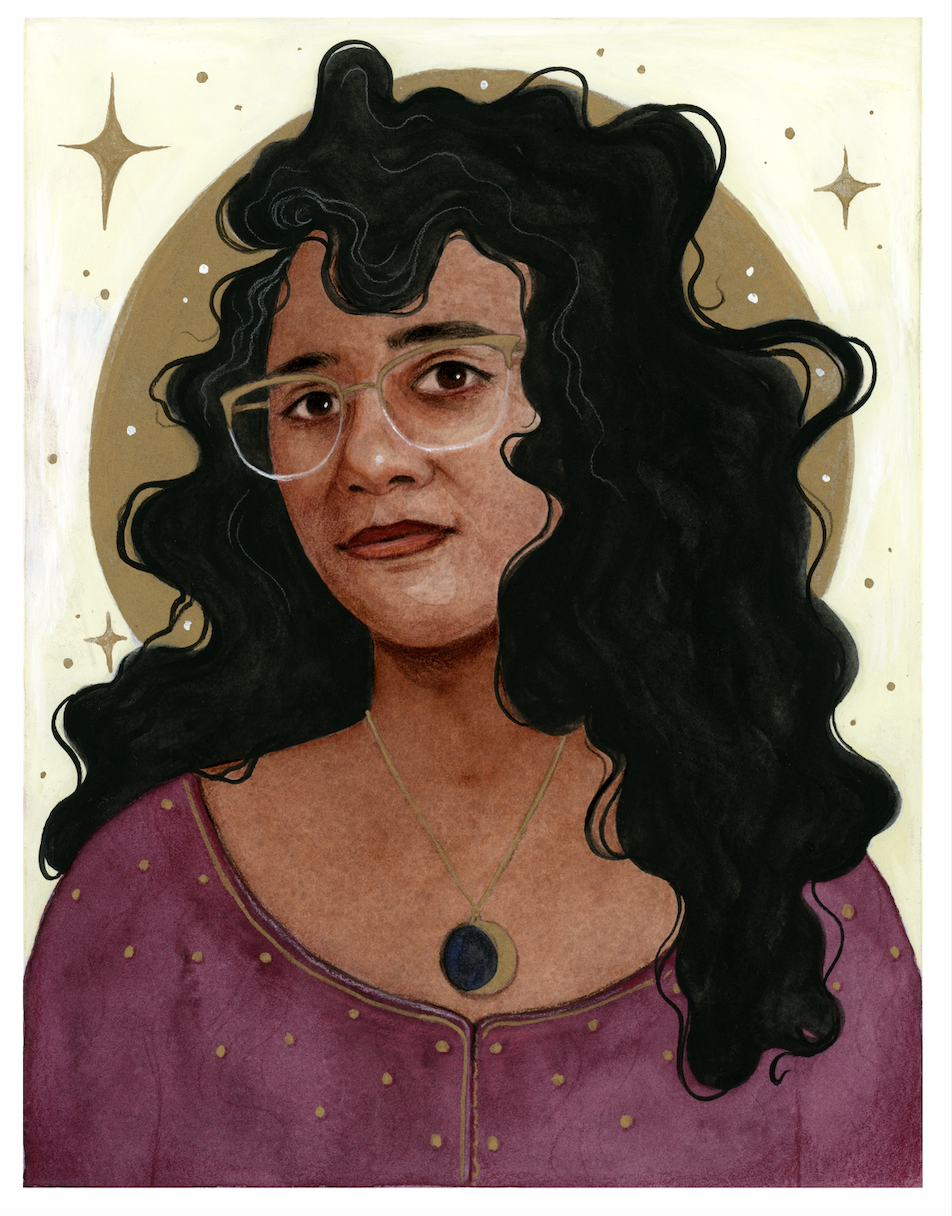
M. K. Thekkumkattil (they/them) is a trans, disabled, kinky writer and nurse whose liberation is bound up with Palestinian Liberation. They received a Rasmuson Foundation Individual Artist Award and fellowships from Queer Art Mentorship, Lambda Literary, VONA, and Writing by Writers. Their debut essay collection, The Sexuality of Care, will be published by Feminist Press in 2026.
heidi andrea restrepo rhodes is a queer, non-binary, crip/disabled, brown, writer, artist, scholar, cultural worker, professor of feminist, queer, and disability studies, and creature of the Colombian diaspora. They are author of The Inheritance of Haunting (University of Notre Dame Press, 2019), Ephemeral (Ecotheo Collective, 2024), Afterlives of Discovery: Speculative Geographies in the Settler Colonial Imaginary (Duke University Press, 2025), Wayward Creatures (Host Publications, forthcoming in August 2025), and Ampersand Organ: a more-than-human lyric anatomy (Milkweed Editions, forthcoming in 2026). A VONA Alum, and 2023 recipient of the Creative Capital Award, they have received poetry fellowships from Zoeglossia, CantoMundo, Radar Productions, and Yale’s Center for the Study of Race, Indigeneity, and Transnational Migration. Their poetry and creative non-fiction have been published in American Poetry Review, The Normal School, Michigan Quarterly Review, Alocasia, Poetry, and Waxwing, among other places. They live in southern California.