The guerilla is like a poet
Enrhymed with nature
The subtle rhythm of the greenery
The inner silence, the outer innocence
The steel tensile in-grace
That ensnares the enemy.
—Jose Maria Sison, “The Guerilla is Like a Poet”
KEEN TO THE RUSTLE OF THE LEAVES
I first crossed paths with the work of Ica Sadagat online and enrolled in her class, “GUERILLA POETICS I”. As a facilitator, Sadagat is mercurial—light-footed and sharp-tongued—and engaging with her pedagogy is more like stepping into cleats for agility drills than dissociating, inertly stuffed in a desk, for the dry duration of a lecture. And lecture she did not; “GUERILLA POETICS” demanded both our mental and physical attention to language and the world around us, a sort of embodied araling aktibista of breath, cadence, technique, pain, and prayer. Or, as Sadagat writes in AT THE MOUTH OF THE SUN I BEGIN, “A body thought. Interoceptive wisdom sharpens the directive.”
Over several weeks in class, we studied, not just letters but the movements that accompany them, whether it be sparring, footworking, boom bap-ing, kitchen cleaving, throat ululating, hand signing, or wild rice harvesting. “What way did you watch?” Sadagat asked us. “And was that entirely up to you?” “Do you know the scale of your attention?” My breath was the flint; language the steel. And thus, friction became fire.
Sadagat extends the embodied activist study in her chapbook, AT THE MOUTH OF THE SUN I BEGIN, beautifully Riso printed by Matiz Press. When I opened my envelope, the chapbook cover’s oceanic cyan reached for my hand and impressed itself in my thumb. In the front matter, Sadagat notes that the writings, “often made during or immediately following martial arts training or surfing or cooking or teaching or organizing,” later culminated as a poem for a global solidarity reading for Palestine in 2023, and continue to sprawl out as an “ongoing score, chapbook, dispatch, and map,” each page a hypha in a mycorrhizal network. Sadagat is working in the same mycelium as the literary writer, Kimberly Alidio, whose concept of “critical wonder”, to paraphrase, encourages the appropriation of material from one’s daily life into writing—risking, of course, the legitimacy of the literary object, which may transgress the strictures of literature as we know it.
ENRHYMED WITH NATURE
Sadagat is as mercurial a poet as she is a facilitator. Mercury traditionally rules language, thought, and communication, but it is also the god of thieves and trickery. The moves Sadagat makes throughout the chapbook “[threaten the] architecture” of the world—they steal, and steal away—in an unrelenting illusion of relation, in the watershed of Édouard Glissant’s “poetics of relation”. Things that appear in twos are actually one, and things that appear as one are actually many:
The numerous articulates more than Together, replacing uTility: two tongues
compounding with the need to be felt
beneath an aromatic night I succumb.
Huwag matakot; succumbing, too, is a part of our rhythm. Perhaps the quiet attentiveness—even, at times, sparseness—of AT THE MOUTH OF THE SUN I BEGIN renders not the punch or the kick itself, but the recovery, the lactic acid settling into the muscles while lying in bed. To move about the world, and to be a speech-wielding creature, is to harness both militancy and mutability. We nourish discipline: “Ritualized impulse becomes my cadence against empire.” And fiercely pivot: “If desire flees, my language ends.” A true athlete understands the importance of adroit movement, of not over-committing. “We action as such.”
Sadagat conceives of the struggle between language and being as the hot friction of a fistful of rope in a tug-of-war. Some of us can use the technology of speech. Maybe the mouth is simply a portal to the hands, should we be lucky to have them, these tools of sparring and caressing, violence and care, brick-laying and wordsmithing. How do we harness hands and letters toward “Materialism, [our] goal”? “To pivot the alphabet,” perhaps “Return to the zero line.”Again, the refrain of the rehearsal or the team practice. Again, isometrically preloading one’s muscles on the starting blocks before the pistol “shoot[s] from sorrow.” Again, discipline.
“That’s a consequence of illumination—light befriending the wall” (emphasis mine). While we are blessed by relation, we are haunted by wounds. Growth never justifies the wounding, but still, growth latches to the hypha of the wound. As Sadagat writes, “Memories index sensation with the intention to change.” This isn’t moral; it’s chemical, or godly. And however thorny the notion of resilience is, there are many “Old questions / that do not require new thinking.” Wounds emblazon us with the chance to pivot. So we ask again, what exists “Beyond response to wound”?
MARCHING AT LAST AGAINST THE STRONGHOLD
Through its invocation of guerilla poetics, AT THE MOUTH OF THE SUN I BEGIN is not (necessarily) a utopic work but a militant one. Throughout the chapbook, Sadagat utilizes the future tense only once, favoring, overwhelmingly, the present and present progressive. Ambiguously but precisely—like Sison’s guerilla-poet—Sadagat writes: “The land we free will henceforth so we never again move backward forwardly”, the syntax of which is opaque, much like our knowledge of the future, or the other. But upon repetition—or, refrain, if we’re singing a song—we can parse the most important future, a being that is so inevitable that its “being” need not be named: “The land we free will” (emphasis mine).
Perhaps attention is the action beyond response to the wound, because, after all, if anything is promised in the future, it is the earth, not our little lives. We must care for the living things that were here before us. And we do this now. And we do this in gerunds. “This geologic disposition” of ours is quotidian, laborial. The truth of “bahala na” is not a fatalism; it is a truth about discipline. Whether you’ve trained, or you haven’t, whatever happens, happens.
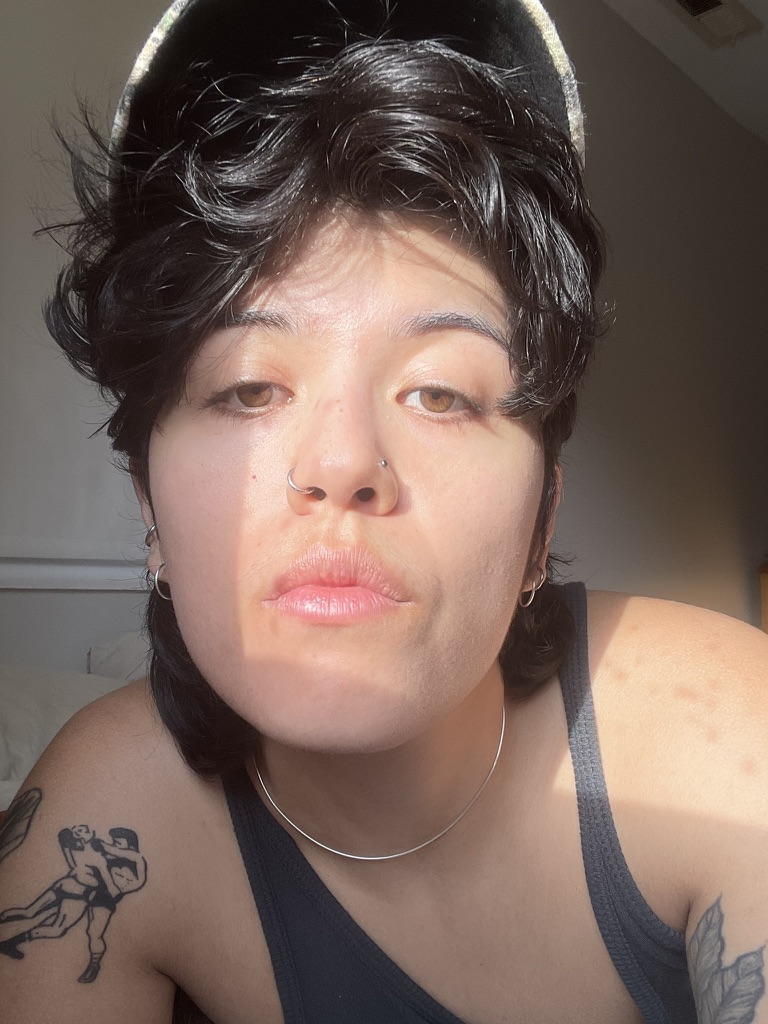
Gray Agpalo is a writer and editor based on Lenape land (Philadelphia) whose work has appeared in Apogee Journal, Bæst, Discount Guillotine, Foglifter Journal, Recenter Press, and elsewhere. They are Communications Editor of Apogee Journal and a member of Sick in Quarters. grayagp.com @chronicbane
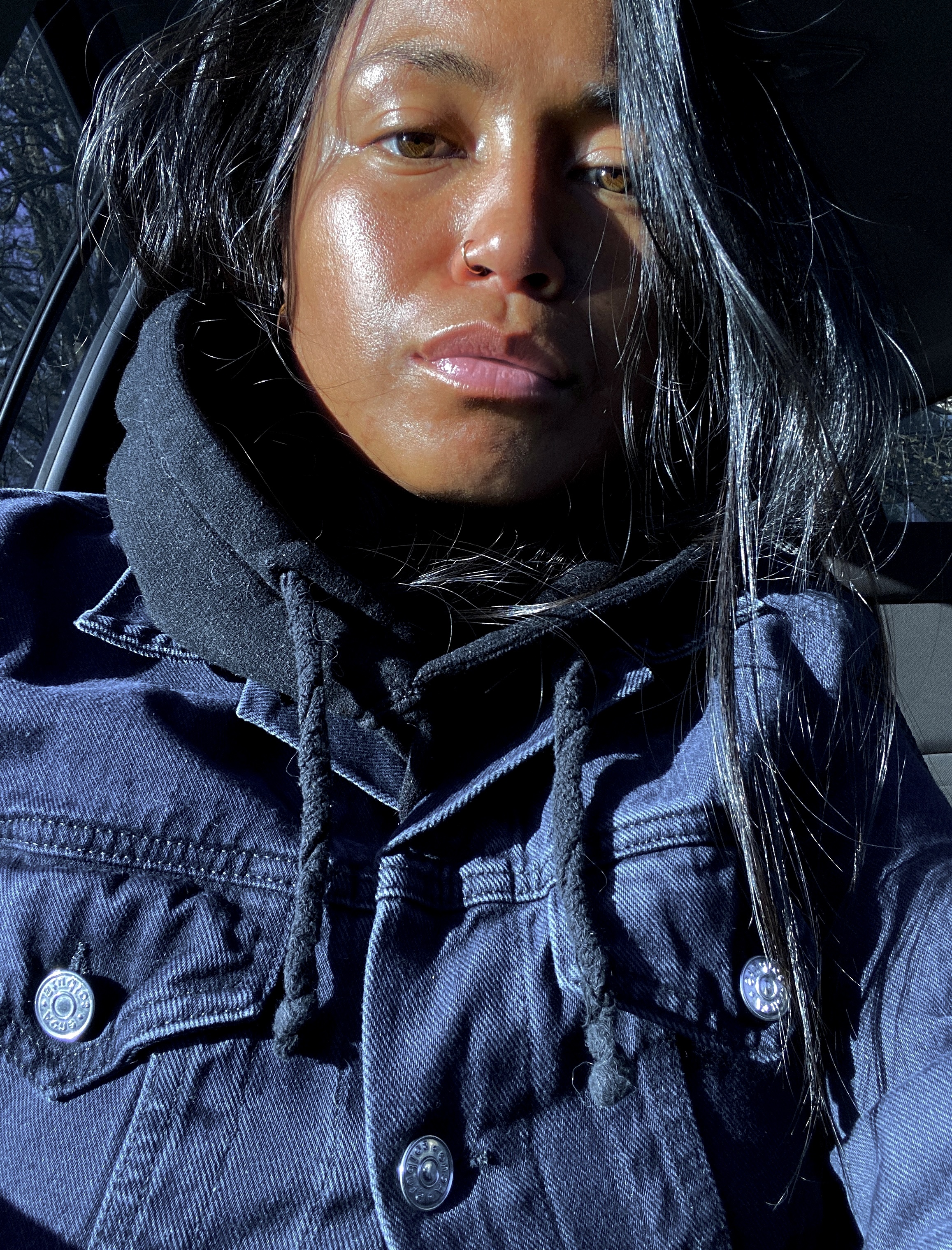
Ica Sadagat is a living writer. She carries roots from Mindanao, Quezon City, La Union, and Batangas. Ica has taught in many spaces and performed in different places. In 2022, she founded Sadagat School of Motion + Text to create more sites for embodied study, guerrilla poetics, and rigorous play outside of formal institutions. Beyond all this, Ica spars, surfs, and tries. For more: icasadagat.co